
|
|
#101
 12-08-2012, 12:00 PM
|
|||
|
|||

Quote:
While we're discussing this so civilly perhaps you could explain to us all this magical phenomenon that prevents a slatted wing from stalling once it has gone beyond its allowable angle of attack? |
|
#102
12-08-2012, 01:58 PM
|
||||
|
||||
|
Quote:
Quote:
Quote:
Quit using wikipedia as your source. It is not credible and in this case is just plain wrong as the author does not understand boundary layer mechanics. In boundary layer mechanics, we have two portions, laminar and turbulent. Laminar flow is the last thing you want on the outboard portion in a stall. Laminar flow is low energy. That is why it is low drag AND subsequently, low lift. Slats work by increasing turbulent flow not laminar flow. Turbulent flow portion of the boundary layer is high energy and high lift! Quote:
The laminar flow is not the purpose of the slats, it is the increase in turbulent flow boundary layer which delays the onset of the stall. No stall = NO SPIN! Hence, the spin resistance found in slats and the reason engineers used them as an early anti-spin device.   They are spin resistant because they allow for control inputs that would normally result in a spin. One can easily see this in the RAE report.
__________________

|
|
#103
12-08-2012, 02:32 PM
|
|||
|
|||
|
Quote:
Of course a stall by itself doesn't result in a spin. It is very, very rare to find an aircraft of any type that cannot spin. I only have experience of one type of Glider that could fit that bill and am confident that aircraft of the 1930/40 era would have to be specially designed. The Me 109 isn't one of those aircraft. I don't disagree when people say that it was a difficult aircraft to spin and that the model is wrong, but go to the extream and it will depart. |
|
#104
12-08-2012, 05:19 PM
|
||||||||||||
|
||||||||||||
|
Quote:
 Quote:
 Quote:
I suggest you read this article, it will help you understand boundary layers and the effect of skin friction and subsequent separation due to turbulence. Extracts from the article......I hope NACA are a more credible source for you rather than wikipedia. Quote:
Quote:
Quote:
Quote:
in case you were doubtfull that slats are a boundary layer control device heres more stuff from NACA.. http://history.nasa.gov/SP-367/chapt4.htm Quote:
Quote:
Quote:
http://www.aerospaceweb.org/question...cs/q0228.shtml Quote:
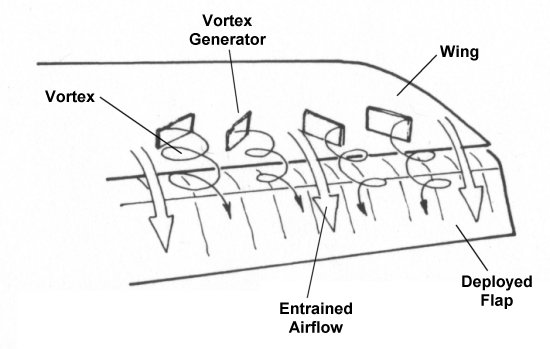 Now hopefully you will be able to explain to us all exactly what are the mechanics involved in complete stall/spin avoidance once a slatted wing has been taken beyond it's maximum angle of attack? |
|
#105
12-08-2012, 05:49 PM
|
|||
|
|||
|
Quote:
I've read it as: "Slats are an anti-spin device in that they extend to prevent the wing stalling, thus giving a pilot a chance to avoid a spin when non-operation of the slats would cause a stall and a possible spin. They also slow down the stall so there is a greater chance that the stall does not result in a spin." Like ABS. It's a device to stop you skidding. It doesn't mean it'll stop you skidding in every situation though. Who was the Finnish 109 pilot who said they don't know what happened in a stall/spin because they never stalled/spun? And isn't this getting away from the original topic, which is do they have any effect in this game? Hood Last edited by Hood; 12-08-2012 at 05:49 PM. Reason: Typos |
|
#106
12-08-2012, 06:30 PM
|
|||
|
|||
|
Slats are or should I say were in the 1930's/40's primarily a device to improve low speed handling qualities and cannot be anti-spin, the only true form of anti-spin is propper handling of the aircraft, slats simply make the behaviour at stall more benign but their effectiveness has a cut-off point beyond which there is nothing to provide these protections, in high speed manouvering the chances of exceeding those limits are much higher.
I believe the relevance of these extended discussions to the original subject is to do with what some people are expecting from the effect of slats, the original question I believe is almost impossible to answer without being able to disable the slats, and that is subject to whether they are actually coded as separate devices as opposed to the FM being modelled with simple wings that reflect performance with slats. |
|
#107
12-08-2012, 06:50 PM
|
||||
|
||||
|
Slats are an anti-spin device. What is so hard to understand about it?
If you have ever flown an aircraft with slats, you can immediately notice the difference in slow flight and stall behaviors. Here is the slats in my old airplane:
__________________
|
|
#108
12-08-2012, 06:54 PM
|
|||
|
|||
|
Slats are NOT an anti-spin device...what is so hard to understand about it?
I have flown aircraft with slats....have you? Quote:
|
|
#109
12-08-2012, 07:28 PM
|
||||
|
||||
|
Quote:
You keep confusing "anti-spin" device with a spin resistant airplane. Spin resistant airplanes employ anti-spin devices such as wing cuffs, LE slats, and slots to build spin resistance. What you are missing is the ability to put it all together. If we were talking about the entire wing being able to stall at once, then the airplane will enter a spin. It takes a lot of work to do that in a Bf-109 by design. First of all, only the outboard portion of the wing receives the benefit of the slats in the Bf-109. In any airplane, the most desirable stall progression is for the wing root to stall first and the tips to stall last. This leaves the wingtip unstalled and the ailerons effective. The next feature of the slats is the automatic deployment. Air pressure operates the slats and they will deploy to exactly the position the wing requires for a given condition. That is why in a skid, they will asymmetrically deploy. For some reason, gamers tend to think "asymmetrical" deployment of the slats is a bad thing, it is not unless there is a malfunction of the slats. Instead, the slats deploy to exactly what the wings need automatically and unless the pilot looks out and is somehow psychologically disturbed by seeing the slats out at different amounts, the airplane skids normally without noticeable effect. The last feature in the Bf-109 is the elevator control is set up so that with the wing root stalled, the pilot cannot continue to raise the nose. The Socata Rallye is designed that way as are many aircraft. The designer uses control design to keep the pilot safe by limiting the moment the elevator can produce about the CG. This way, the wing tips remain effective throughout the stall. Cessna does this in a C-172 as well. Again, it is a common feature in a properly designed aircraft. Now, Mtt did have to demonstrate spin entry and normal recovery in the Bf-109. They did this by adversely loading the aircraft to its rearward CG limit and modifying the slats to be pilot controlled. In other words, the airplane was at its rear most CG limit and the pilot could lock the slats so they did not deploy.
__________________
|
 |
|
|




 Linear Mode

