
|
|
#111
 06-21-2010, 06:22 PM
|
||||
|
||||

The following two stories come from the book “Un Pilota del Cavallino Rampante”, (edition La Galaverna-Flaviana, Battaglia Terme, Padova, 1999) written by Tenente Pilota Paolo Voltan, 4° Stormo Caccia, Regia Aeronautica Italiana. They refer to two different missions, flew by Paolo Voltan on August 14th and September 8th, 1943.
translated by EAF51_Bear August 14th, 1943, over Sicily On 14th of August our flight took off with 8 planes. They were all Macchi C.205, armed with two 20mm. Cannon (finally!) and the usual two m12,7 mm. Machine guns. I was the wingman of Ten. Querci, and we were the third section, flying close to him on his right side, as for the general rule in combat flying (…). Our flight of eight planes climbed up to 3.000 mt. Our orders were to climb up to 6.000 mt., escorting a flight of RE.2002, flying at 5.000 mt. The difference in height of 1.000 mt. should have allowed us diving attack, in case an enemy formation would attempt to intercept the RE.2002 in order to stop their bombing attack (….) We were flying over Milazzo, when a short burst from our flight leader warned us that an enemy formation was in sight. I rased the head, and high in front of us, a little on the left, I saw a formation of not less than fourty Spitfires, diving toward us. As soon they were about 300 meters from us, they opened fire all together, and an avalanche of red tracers hit us, while our sections break on the left or on the right, attempting to avoid the enemy fire. Querci made an hard break on the right, and I followed him carefully, while feeling my sweat running on my head. My hand was firmly keeping the stick, my finger ready on the firing button, in order to open fire as soon as needed. Closing on maximum turn, Querci was trying to position himself at 6 o clock of some bandit, because after the first merge it was only a matter of ability. In fact the manoeuvrability of our Macchi enabled us to engage the whole enemy formation, until the RE.2002 were on target. The Spitfires, meanwhile, were all around us in the sky, flying in sections of two planes. I was still flying near Querci, continuously checking around to watch possible treats. Suddenly in front of us we saw two Spitfires turning hard on the left. Querci opened fire, but due to the turning rate, the tracers missed them near their tail. I was ready to engage them, but then I saw two other Spitfires coming from the right, aiming at Querci plane. With an hard bank on the right I turned toward them, hardly missing to hit them both, but making impossible to them to open fire on Querci. I suddenly realised I was alone, while all around I can see a furball of British and Italian planes, firing and running the ones after the others, in the middle of an hell dogfight. In that moment two Spitfires crossed in front of my plane, flying in very close formation. They should have miss me, because they were turning on the left, following an isolated Italian plane. In a matter of seconds I close on their six, pushing my Macchi on maximum turn without falling in a spin. A few seconds again and I would have been able to put the enemy wingman in my gun sight. I felt the plane trembling and shaking as usual, announcing the beginning of an horizontal spin. Pushing a little forward the stick I succeeded in stabilizing her, while I realised I was slowly gaining advantage on the bandis, that probably did not spot me yet. Shooting at the wingman would give me an advantage. If the leader would not know the wingman was hit, I could lately attack the second target with another burst. The progresses I was making spiralling totally took my attention, and I forgot to check my six, where suddenly I could find another section of Spitfires. The bandits were finally in my gun sight. I knew that if I wanted to hit them, I should aim ahead of them. On the contray our continuous turn on the left would have pushed my bullets away from the target. When I let the first burst go, I had the confirmation of my thoughts. In fact the tracers showed my burst were missing the bandit, sliding down, away from his tail, leaving the two planes still free to aim to their hunt to the other Macchi. A second burst hit the wingman Spit. The plane banked: initially a dark smoke burst out of his engine, than a sudden fire blow on the whole plane, that went down as a torch. I got him! The other was not yet aware of having lost his wingman, because was still engaging the other Macchi. This was still turning on the left while climbing, knowing this was the best way to get free from the dog on his tail. Looking around I could see planes flying in all directions, but no one of the British was following the RE.2002, that in the mean time should have accomplished their mission. On my gun sight I still had the other Spit, and I was committed not to leave him for any reason. The victory I got on his wingman push me to a wider turn, and I had to close again, if I wanted to get the other too. The hard turn was pushing me on my seat, and moving my head in the different directions was an enormous effort. A few seconds again, and I could fire another burst on my target. The shape of the spit was slowly entering in my gun sight, well centred in the external circle. I should just wait a little, to put it right in the central cross of my gun sight. Than I had to go further ahead, in order to aim before the Spit, and balance the turn speed. When I shoot, a burst erupted from the Macchi’s guns, shaking the whole plane. My tracers hit the target that, being turning, was totally exposing his full shape in gun sight. I can see my bullets entering his wing, the cockpit, the engine, but the plane was still flying as nothing was happened. I was ready to shoot again, when I saw some red lights passing near my plane. I turned suddenly my head, and what I can see where the turning propeller blades of two Spits, with a spiral painted on the nose, creating a strange visual effect, and together with tem, the flashing machine guns shooting at me. At that moment I was not really thinking what I was doing. My reaction was pure instinct. With a sudden break I turned my plane on the right, closing the throttles. The two Spits passed over me in overshooting, and I found myself on their six, but unfortunately too far from them. I opened full throttle, trying to catch them, but they were really too far, and I would have needed too time to do that.. I needed some rest after all that emotions: I had a look around, and I realised I was alone. The remaining Spits were heading toward the Mount Etna. No other Macchi in sight. My altimeter was showing 6.000 meters (…)Watching the clock and the televel, I understood I was flying since 70 minutes, and it was time to return to homebase… __________________ September 8th, 1943 - My Squadron, 73^ Squadriglia, belonging to the 9th Group of 4° Stormo (Wing), was based at Gioia del Colle since August 28th, 1943. We were flying Macchi C.205, finally armed with 20 mm. Cannons, and a maximum speed of over 650 Km/h. We scrambled at around 10,30 AM. We got notice of a formation of 65 B-24 Liberator south of Pescara, flying toward south, returning to their bases in Tunisia. We take off in eight planes (…) we climbed at maximum rate at 6.000 mt. (...) The possibility of attacking a group of 65 bomber was making all of us excited. The first to spot the Americans was Rinaldi, my wingman (….) The American tactic was always the same: flying in boxes, so they can enforce their offensive power. A formation of 65 Liberators may provide firepower of 650 machine guns, and approaching them as very dangerous. We knew that their guns can fire horizontally for about 300 meters, than the bullet would change their trajectory, loosing a great part of their speed. As a consequence Liberators gunner did not open fire until our planes were very near. Our tactic was flying in the same direction as them, on the side of their formation, at a distance of about 500 meters. Their speed was about 450 Km/h, and therefore we had a speed margin of about 200 Km/h. So we flew straight, over passing them, and then with an hard turn, attacking them frontally. This was the side in which B-24 were more vulnerable, due to dead angles caused by the engines, where the gunners cannot fire. When we over passed the formation of about 500 meters, a little higher than the bombers, dive toward them and firing. The volume of fire hitting our planes was terrible, but the duration of the attack was only a few seconds. As soon we were approaching the closer, we made a roll, turning our plane upside down, and reverse in a half split-s and fast diving toward the ground. While turning, we were showing all our shape to the bombers gunners, but only for a few seconds. Continuing our dive until being out of sight, we climbed again on the opposite side. Then we flew again on the side of the formation, waiting to be again straight in front of them, in order to start the next passage. This kind of maneuver might be repeated several times, at least until the remaining fuel in our fighters allowed us to attack again. That day, as soon we spot the bombers, while moving on our attacking position, a formation of eight Spitfires suddenly appeared on our right side. Fortunately they were not higher than us, and so they did not dive on us firing. The four Macchis on the right side of the bombers abandoned the attack route, turning toward the Spits. The other four, including me and Rinaldi, continued in their pursuit of the bombers.. From my cockpit I could see the furball between the others. The altitude was favourable to the Macchis, because until 6.000 meters our planes were practically unbeatable. Mariotti, followed by his comrades, went into the dogfight wit a terrible commitment. In spite of being four against eight, the Italians soon were dominating the situation. The maneuverability of their planes, and the ability of the pilots put them in the condition of being able to fire without being fired. The duel last about ten minutes, while we were flying south, following the bombers. The intercept happened south of Termoli, and the fight continued toward Puglia, with our series of attacks … At the third pass one of the leading planes banked on his wing, while a long black smoke was erupting from his wing. After firing at him, when I rolled upside down and dived, I could see her well and clearly while climbing on the opposite side. The B-24 was flying without control, in a narrow spiral dive. Was the end: the huge beast was going down smoking, while I could see some parachutes opening over her. But we need to make another attack, although we already flew over Bari, heading to Jonio see. In the following pass another B-24 started to smoke heavily and to loose hight, without loosing control. At least other five bombers were heavily damaged.. We were now flying over Santa Maria di Leuca, and our fuel level did not allow us to perform another attack, therefore we headed home, very curious about learning the story of the other section. They were already arrived at home base before us. One spit shot down and confirmed, maybe a second one. A poor score, but obtained by only four Macchis against eight Spitfires, that at the end decided to disengage (….) Each fight was always different from the others. After this dogfight our debriefing conclusions were two. The fighters attacking the Spits make a few comments about the ingenuity of the British, being outturned by the Macchis, without succeeding in break, and therefore hit by our fighters, and running home at the end, helped by the fact that our Macchis were out of fuel, and therefore cannot pursue them. The other section got a good confirmation about their tactics in attacking bombers, able to produce good results. The limited fuel was the main reason why of the limited results. But it is also important to mention that we were only four against 65 of those huge bombers, and the volume of fire shoot at us was really terrible (…)
__________________

|
|
#112
06-24-2010, 09:09 PM
|
||||
|
||||
|
the one that got away...
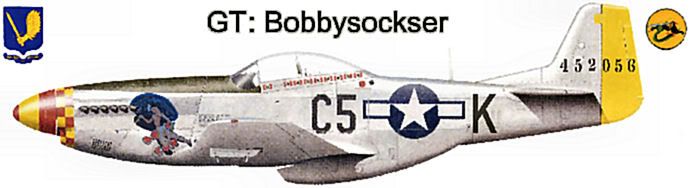
Lt. Dale E. Karger 14 Jan. 1945 I was flying Greenhouse Green Four position on an escort mission to Berlin. Our squadron was sweeping out in front of the bomber stream when 100 plus enemy fighters were spotted coming from at least 2 directions. The squadron was still in a fairly close formation and still had our drop tanks on. I was in the tail end Charlie position in the formation. For some reason i glanced to my starboard side and was very much surprised to see a Me 262 jet opposite me up behind Greenhouse Two. The 262 was in so close in our formation that I was completely taken with excitement, and my thinking clouded up a bit to say the least. Up until this time we were on radio silence except for someone calling out the incoming bogies. I yelled on the radio, "There's a jet job on your ass!" which probably caused everyone in the group quickly check their 6. I was so excited I couldn't think clear enough to identify myself or the aircraft being trailed. I have no idea why the German pilot didn't hit his guns and take out the number 2 man. He had creeped in to a point blank position. One of the first things you are taught as a fighter pilot is to look more behind you than ahead, but I think the reason for me not doing that this time was the fact we were still in a pretty tight formation and it is rather difficult to look around as much when in closer. The only thing I could think of to do under the circumstances was to swing my plane over and get behind the jet. The German must have anticipated this and immediately gave it full throttle straight ahead. By this time I was directly behind him lined up for a perfect shot. I squeezed the trigger anticipating to see tracers fly through the air....NOTHING happened! I squeezed again and again no guns. Gun switches ( heaters) were kept off as a precautionary measure to keep you from accidentally pulling the trigger and hitting one of your own people. Caught up in the excitement of the moment i didn't turn on my guns or drop my tanks. By now I was flustered and as I looked at the controls I drew a complete blank as to what switch to turn on ( yes, they are all marked). In the meantime due to his superior speed the jet was pulling out of range fast. After smacking myself on the side of the head a couple times, I regained enough composure to get the right switched on and let go a few quick bursts but to no avail. He was too far out of range. I told this story to someone before and told them how lucky the guy was that I lost my cool because there is no way he could have out run my six 50 cal machine guns had the switches been on. The person I told the story to had another view of the whole thing that I had never thought of, He said maybe I was the lucky one and that maybe that jet could have pulled up behind me and shot my ass off first. Needless to say, I pondered that for a long while. Well being as this whole thing was a fiasco from the start you would think nothing else could go wrong! As fate wold have it while I was above and out to the side of the group after the jet, the whole bunch turned left leaving me as we would say, "fat, dumb, and happy all alone at 25 to 30,000 feet." I figured I would make the best of a bad situation and so dropped my tanks to get ready for whatever would come next. Looking below me about 5000 feet I could see a big dogfight starting as everyone was turning left in a circle with lots of shooting going on. My next mistake was that I thought I would dive right in the middle of this mess and get some. As I did this I knew right away it was a bad, bad move. There were bullets flying and burning planes everywhere so I got out real fast! I figured I would sit on the outside and wait for a straggler to come out. It wasn't long before a lone Me 109 came along heading for the deck. I think he had his fill of what was happening and decided the easiest thing to do was go home. Anyway, in the meantime, Greenhouse Two ( the guy who originally had the jet on his ass) joined up with me as my wingman. As I started after the 109 at about 20,000 feet he made a slow decent East. I closed very quickly and throttled back, even had to drop a few degrees of flaps to keep from running over him. Still I ended up flying beside him almost wing tip to wing tip. When I dropped behind him to fire I was so close that I think most of the bullets were going around both sides of the cockpit and converging in front of him because I couldn't see too many hits. But enough of them found their mark. He may have been having engine or some other problems because he made no attempts at evasive maneuvers. When the 109 finally bellied into a field I made one quick pass and fired setting the craft on fire. In spite of all the goofy things that happened this particular mission it ended up being pretty spectacular for the 357th Fighter Group. The sky was a perfect clear blue and any direction you looked you would see a couple burning planes going down. We were credited with shooting down 55 German aircraft and were awarded a Presidential Unit Citation and a commendation by General Doolittle. Our losses for the day were 3 to 4 as I best recollect. This is probably one of the few stories my father ever wrote down and would comment on it saying that sometimes you you survive despite all your screw ups. Then again when I think of it, he was one month shy of his 20th birthday. When i think of the momentous decisions I had to make as a 19 year old...they pale drastically in comparison.
__________________
Last edited by bobbysocks; 06-24-2010 at 09:11 PM.
|
|
#113
06-28-2010, 11:07 PM
|
||||
|
||||
|
the whole interview with franz stigler. not only the charlie brown incident but time in africa and ...
http://109lair.hobbyvista.com/articl...er/stigler.htm
__________________
|
|
#115
07-18-2010, 08:28 PM
|
||||
|
||||
|
Here is a synopsis of Villamor's memoirs from the exploits of the
Sixth Pursuit Squadron, December 1941: 1st Kill: Mitsubishi Zero A6M (Navy Carrier Based Fighter) On December 10, 1941 an alarm was sounded over Zablan field, Quezon City. Current location of the AFP Supply Center and the Corps of Engineers From their base in Batangas Field, Batangas, Capt. Jesus Villamor, Lt. Geronimo Aclan, Lt. Godofredo Juliano, Lt. Jose Gozar, Lt. Manuel Conde, Lt. Antonio Mondigo were able to take off to intercept the force attacking Zablan Field. Uncle Jess got to 5000 feet and noticed a Zero on his tail. Rolls, climbs, snap turns, nothing worked. The Zero could do everything faster and better. At this point in time Uncle Jess regretted underestimating (like the rest of the USAAC) the Japanese aviators and their Zeros. He concluded that he could not outfly the Zero. He had to outsmart him. He dove down into the Marikina Valley, Flying at tree level, hugging the ground flying through gullies, even flying underneath power lines. He lost the pursuing Zero. However, as soon as he climbed, another Zero was on his tail. He climbed sharply. Doing so, he stalled his P-26. Struggling to gain control, the P-26 stood on its tail and dropped, snap rolling to recover, he found himself in front of, and head to head with the Zero. They were so close that Villamor could see the Japanese pilot struggling to avoid a collission. Instinctively he pulled the trigger. Villamor saw tracers fly, and the incendiary rounds contacted the Zero's wing. It ignited the Zero's fuel tanks and burst into flames. 2nd Kill: Mitsubishi G3M (Navy Attack Bomber) "Nell" On December 12, 1941, a flight of 54 Attack Bombers and 18 escorts were sighted enroute and the alarm sounded over Batangas Field, Batangas. Current location was the site of the former Philippine Constabulary Headquarters of Batangas Jesus Villamor was able to take off. This time with Cesar Basa, his wing man. Villamor and Basa were able to reach altitude and pointed their P-26' head-to-head with the "Nells." Villamor fired his .30 cals in short bursts. To his astonishment, a Nell started to smoke, then descend, then break up! A lucky shot! Seconds later, the escorting Zeros were on them from out of the sun. Villamor and Basa did all they could to outfly the Zeros to no avail. Villamor looked back and saw Basa's plane have chunks fly off. Basa was hit. Basa struggled to bail out of the cockpit as his mortally stricken P-26 dove to the ground. The Zero followed. Later that day, Basa's body was found not far from his plane's wreckage. His body was riddled with bullets beneath his parachute. The Zero pilot had machine gunned him. Lt. Ceasr Basa was the first Filipino pilot to die in aerial combat. Honors and Withdrawal Douglas MacArthur, hearing of the Sixth Pursuit Squadron's actions, sent out a communique to all forces under his command recognizing and naming all of the Filipino pilots for their galantry. MacArthur decorated Villamor and bannered him as an inspiration to the Filipinos as he was calling upon the people to stand against the Japanese. Later, another communique from MacArthur ordered the Sixth Pursuit to conserve their planes. No more Interceptions. No more Pursuits. No more hosite aerial combat. Reconnaisance missions only! Manila was declared as an open city. MacArtur ordered the pilots of the Sixth Pursuit Squadron to destroy their planes and withdraw to Bataan. Uncle Jess painfully said goodbye to his well worn and beloved P-26 #303 and ordered a sargeant to dynamite her. Other Interesting feats from our pilots: Lt. Geronimo Aclan on December 10th flew his his P-26 expertly, and in a moment of fury tried to RAM a Zero, missing it by inches! It so unnerved the Zero pilot that he flew away. Villamor reminissces after the war that had Aclan succeeded with his ramming maneouver, he would have been the first Filipino Kamikaze! Lt. Godofredo Juliano, because of expert flying skills, was actually able to line up a zero for a belly shot. As he was charging his guns, the right cocking handle broke off in his hand. The left gun jammed. He ended up being unarmed and flying into the clouds for cover. Lt. Antonio Mondigo was shot down. He was able to bail out. floating down in his parachute, a Zero approached to machine gun him (like what happened to Basa). Lieutenats Aclan and Juliano came to his aide and circled Mondigo and protected him from the Zero, which broke off the attack. Mondigo landed safely, but was charged with Bolo, pitchforks and spears by local villagers who mistook him for a Japanese. They were yelling "Japon! Japon! Patayin natin!!! (...Japanese! Japanese! Let's Kill him!!!) He yelled in Tagalog, and was saved from being turned into hamburger by the lynch mob.
__________________
|
|
#116
07-20-2010, 06:15 PM
|
||||
|
||||
|
the enemy isnt the only threat you face..
An Account by Wing Commander Hank Costain MBE
In spite of the advances made in aviation, man is allowed to use the sky on sufferance, never as a right; and, as Hank Costain now tells us, the elements can regain control of their domain in the most brutal fashion. During the summer of 1944 I was a Flying Officer with 615 Sqn operating Spitfire VIIIs. During the battle to repel the attempted Japanese invasion of India we had been flying from Palel on the Imphal Plain but the time came for us to pull back out of the front line for a brief rest. Accordingly, on August 10th, our 16 aircraft took off from Palele with the CO in the lead, for a nice easy trip to Baigachi near Calcutta; for a quarter of our pilots however, the flight would be their last. For much of the route we had underneath us puffs of thin fair-weather cumulus and as we neared our destination we let down through them. Soon afterwards the cloud cover above us became complete, but as we had good contact with the ground everything seemed all right. Indeed it was, until straddling our path we found a thick brown storm cloud extending right down to the ground. Clearly we could not go forwards through it and, because we had passed our point of no return, we could not go back to Palel either. So the CO decided to take us back a little way, then we could climb up through the layer of cumulus and once above it we could search for a way through the storm; but it never happened that way. Soon after re-entering cloud there was a sudden bang and everything seemed to happen at once: the sky turned black as pitch, my Spitfire reared up and the stick seemed to go wild in its attempts to wrench itself out of my grasp. Somehow we had slid into that dreadfully turbulent monsoon storm cloud. Within seconds I was completely out of control and with the artificial horizon toppled I had not the faintest idea which way was up. Outside it was so dark that I could not even see my wingtips and the pounding of the walnut-sized hailstones on the fuselage drowned out even the noise of the engine. In my earphones I heard the frenzied chatter of the other pilots as they treid to fight their way free of the storm's clutches. Of all my flight instruments, only the altimeter seemed to be reading correctly and from its spinning needles I learned that I was in a violent up-current. After going up rapidly through nearly 10,000ft during which my stick seemed to have no effect at all, the Spitfire bucked and entered an equally vicious down-draft and we were plunging earthwards just as fast. Again, nothing I did with my controls seemed to make the slightest difference. As the altimeter reading neared 1,000ft it became clear that this was no place for Mrs Costain's young lad - I had to bail out. First, I had to get rid of the hood, so I yanked hard on the jettison ball above my head but the tropical heat had perished the rubber and it came away in my hand. Charming! Since the hood would not jettison I slid it fully back on the runners, then trimmed the nose fully down and undid my seat harness. Finally, I let go of the stick and as the Spitfire bunted forwards, up I went like a cork out of a bottle. At least, I would have done if not for my parachute pack getting caught on the overhanging lip of the hood. The next thing I knew I was tumbling head-over-heels along the fuselage before ramming hard into the tailplane and shattering my leg. As the tail disappeared into the glood I grabbed at the parachute D ring and pulled it, then I glanced down to see the ground rushing up at me. The parachute canopy deployed just in time, but even so the landing on my boken leg was excruciatingly painful. As I lay in a sodden heap in that flooded Indian paddy field and began to collect my wits, my first thoughts were for the perfectly good Spitfire I had just abandoned. "Good God" I remember thinking "what on earth am I going to tell the CO?" Luckily I was picked up soon afterwards by some of the locals and they took me to a doctor. In less than 5 minutes, 615 Sqn lost its CO and 3 other pilots killed and 3 more injured; we had written off half of our aircraft, 8 of the most modern fighters in the theatre. And it all happened without there being a Japanese fighter within a 100 miles. When it is angry, the sky is a foe without mercy.
__________________
|
|
#117
07-20-2010, 06:31 PM
|
||||
|
||||
|
it wasnt only the pilots who fell in harms way..
My brother, Dick, joined the RAF in August 1938 as ground crew. At the beginning of 1940 he was posted to 13 Squadron, an Army Co-operation Squadron with the BEF. When the German attack came in May 1940 the allied armies could do little to resist the enemy advance and a large part of the BEF was soon being evacuated from Dunkirk. The remainder, together with the French armies, was retreating southward. Unable to reach Dunkirk, Dick somehow extricated himself from the chaos that ensued and he made his way through France and eventually got back to the UK. His journey took ten weeks. My brother died in 1996 and when his wife died three years later his step-daughter sent me his personal papers. It was with the arrival of these papers that I began to realise that what he had told us many years ago about his 'adventures' in France in 1940 was true. From these papers and other sources I have pieced together the story of his escape.
A young Lancashire lad of just nineteen, he had never travelled abroad before and he knew no French. Yet he managed, using his wits and a lot of luck, to travel through occupied and unoccupied France during June, July and August 1940, eventually reaching Switzerland, from where he returned to England via Spain and Portugal. After the war he did occasionally talk about his adventures in France, but we as a family were busy with our own lives and never pressed him for details of his escape. Apart from myself, my two sisters and a cousin are the only close family who now remain and from them very little information was available to help flesh out the details of Dick's escape. It was agreed that he was stationed near Abbeville. My cousin remembered him saying that the personnel of the camp were awakened by the words, 'RAUS! RAUS!' The Germans had overrun the aerodrome and they were taken prisoner. They were marched along a road in a long column - long enough for the guards to be at quite a distance from my brother. So Dick took a chance when the guards were out of sight and went over the wall that bounded the road and escaped. My cousin also remembered that Dick had been arrested in Port Vendres on the south coast of France. A woman he met there with another couple tried to pass him off as her husband to enable him to escape by ferry to North Africa with the French who were being given preference. However, an Englishwoman, recognizing Dick as being English, demanded to know why he should be included with the French group and not her. The ensuing argument was heard by the police who arrested him and marched him off in handcuffs. One of my sisters remembered Dick saying he was in a cabbage field being shot at but, when and where that was, she couldn't say. My other sister remembered the letter that came saying he was missing. My own memory is equally vague. My brother was given to romancing. He enjoyed telling a good story. I remembered a tale about a baronness - Irish - with whom he stayed, who gave him one of her husband's suits - how he escaped from a prison and, in the process, injured his ankle - how he set off in a boat from the south coast of France and was shot at and, somewhere in my memory, a man who accompanied my brother for some part of the journey who was(here the story goes off into family speculation) perhaps an agent - somebody who knew his way around. But my brother had kissed the Blarney Stone and so who really knew what had happened to him? It is possible that no one in the family ever learned very much about Dick's escape. When he eventually returned to England he was probably told to keep secret the details of what had happened. It was common knowledge in the family, however, that he managed to reach Switzerland and from there he was sent to Portugal. He was flown back from Lisbon to Poole in Dorset and then, after debriefing, he rejoined a squadron at Manston. There were many great escapes that have been well documented by those concerned. Unfortunately, what I have is only an outline of my brother's travels with many gaps in it. From about the 24th May to the 28th August Dick was on the run, trying to return to England. What is so fascinating to me is that he managed it at all and so I am writing his story, hoping that some of the gaps may, even at this date be filled. Opening the envelope from his stepdaughter was like opening Dick's life again. Things he had touched - had used - that had been the means of bringing him safely back to his family were there. The first thing I found was a passport issued at the British Consulate in Geneva and dated 10th August1940. It gave his full name and he was described as a chauffeur. It included a photograph of a much-slimmed-down-brother, and this passport was perhaps the most significant article in the collection of papers. This confirmed that Dick had in fact travelled through France and made his way to Switzerland safely. The passport also included transit visas issued by the French, Spanish and Portugese Consulates in Geneva giving him permission to travel through France and Spain by train to Portugal. A receipt from a jeweller in Grenoble dated 14th August1940 shows that he stopped there - to change trains most likely. It may be that this was where he bought a watch that he later wore. From there he appears to have made his way safely to Lisbon. This is surprising as he spoke no French, Spanish or Portugese. Did he return with a companion and was this man the family thought was a returning agent? The family, knowing about Dick's impetuosity, either created this shadowy figure to explain his success in coping with this journey, or he did exist. If he had got into Spain on his own, there is little doubt he would have been interned. It is almost impossible now to imagine what it must have been like on trains in the south of France at that period. The French police (or some of them) may have checked passports and arrested suspicious persons or, on the other hand, some French police may have helped my brother. it is clear that, during the journey from Switzerland to Portugal, his transit visas gave him immunity from arrest. There was also a British Airways flight ticket dated 28th August1940 which he used to return to Poole in England, probably by flying boat. By this time my mother had received only four messages relating to him. The first was a Field Postcard from France on the 24th May saying he was 'quite well'. This was followed by a note, hastily written on a piece of lined paper, that reached my mother on the 4th June. This said: Dear Mum, You OK? In fact I suppose everybody's OK. Am a bit pushed for time so forgive brief missive. More later. Love, Dick PS Send this letter to Grandma. Don't reply. Perhaps the brevity is understandable if one remembers what was going on in France at the time. Then,on the 10th August a telegram from Dick arrived from Geneva. It said: 'Dear Mother. Am well and safe. Shall be home near future. Stop. Cheerio. Dick Clifford. The other letter was from the Air Force Record Office stating that Dick was believed missing. My mother had been in communication with the Air Force regarding Dick and a letter dated the 15th August1940 informed her that he was posted as missing 'consequent upon the withdrawal of our Forces from the Continent. You will appreciate' it said, 'that your sone being missing does not necessarily mean he is killed or wounded.' Luckily Dick's telegram had already arrived. These few documents were the only evidence I had at first of Dick's escape from Occupied France. It would have been easy to leave things there but their arrival had aroused my curiosity. An article in 'Saga'about the Escape Lines caught my attention. I contacted the author, Mr. Stanton, who was most helpful. He told me that all personnel who escaped from occupied Europe would be debriefed as soon as they got back to England and it might be possible to obtain a copy of my brother's debriefing report from the Public Record Office. The report confirmed Dick's story and gave more details of his escape. Sixty years after the events it makes fascinating reading. On the 26th May Dick had arrived at a deserted aerodrome near Nantes. He found a car and petrol and started to drive south. He picked up some French refugees at one point who appear to have travelled with him for much of the journey south. It took them about a fortnight to reach the south coast at Perpignan. At that time this part of France was crowded with people trying to escape - French, British and other nationals and quite a number of allied servicemen. Dick and his companions tried to get into Spain but at the frontier near St. Girons they were turned back by the Spanish. They then maade their way along the coast to Port Vendres which was a port of embarkation for the British, but by the time they got there it was too late. It appears that Dick separated from his companions at this point. He met a wealthy gentleman from Monte Carlo who had two women with him (these must have been the people referred to by my cousin) but they were unsuccessful in their attempt to get him on the ferry with them. He was arrested by the French police in Port Vendres and he mentions walking throught he streets in handcuffs. This had obviously stayed in his mind. Until that time he would have regarded the French as allies. On this occasion he seems to have escaped without much difficulty and somehow managed to steal a motor boat. But he was arrested before he could get very far and again escaped. Either the camp was carelessly guarded, if at all, or by now Dick was becoming an experienced escapee. He next reached Argeles, where an English woman, a Mrs. Davis, put him up for the night. Then he got a lift on a diesel truck to Avignon and from there another lift took him as far as a bridge over the River Rhone. He continued walking in the general direction of Marseilles and spent the night before he reached that city in a small village on the outskirts. When he reached Marseilles he found accommodation in a Seamen's Mission where he stayed for about two weeks. Whilst there, he met several British soldiers and a group of American seamen. He decided to try for Spain again with one of the soldiers but they soon split up. Dick made his way alone via Bohen, Salon and Arles to Beziers where again he was arrested - and again he escaped to continue his journey westward through Narbonne to Perpignan. It seems that the French authorities treated escapees like Dick in a variety of ways. The Garde Mobile gave him a 'sauf conduite' whilst others arrested him. This period must have tested Dick considerably. Luckily it was summer and sleeping in an orchard or wherever would not have been too uncomfortable but there is no information about how he obtained food or what he ate. On his return he mentioned very few people who had helped him and one can only speculate as to how he survived. Of the people who helped him, those he specifically mentioned were Mrs. Davis and a Russian woman who was a refugee. But there must have been others (or so we would hope). Certainly this part of his debriefing suggests that, apart from the two weeks in Marseilles, Dick was constantly on the move. He now gave up the idea of getting into Spain and decided to try for Switzerland. Whilst in the Perpignan area he met a Czech who spoke English. Together, with some money given to them by the Russian woman, they took the bus northwards. How much of the jouney they walked and how much they went by bus is not clear, though Dick says they 'walked to Andancee and on to Vienne'. The Germans had troops in Lyons so they 'decided to go to Grenoble'. They walked another 9 kilometres from Vienne and 'stayed the night in a tramshed'. In this way, walking and sleeping rough, they reached Annecy, where they tried to obtain further 'sauf conduites'. This time Dick was asked why he had not been demobilised and presumably because he had no satisfactory explanation he was arrested again and put in 'a subterranean prison'. But the Czech was allowed to go free. Dick was beaten up and generally badly treated in the prison. Whether this was by the inmates or warders is not clear. perhaps the French authorities thought he was a German spy - he was tall and fair-haired. On the other hand this was about the time of the attack by the British fleet on French warships in Oran so it would not be surprising if many French people were anti-British. Dick became ill, possibly as a result of the harsh treatment, and was moved to the barracks from where he escaped yet again. The final part of his journey to Switzerland he describes vividly - the railway line, the barbed wire, the sentry patrolling the border and the vineyards on the Swiss side. He made an unsuccessful first attempt(too noisy) and then was across. In Switzerland he wasn't asked to show any papers and soon arrived in Geneva and, from then onwards, was helped by the British Consulate. His journey from Geneva to Lisbon appears to have been uneventful. My brother's debriefing statement is now at the Public Record Office. That I was able to obtain a copy of it has helped me gain further information about his escape from France. When Dick was on the run there were no official escape lines. These were set up later. The designation of 'free runner' was given to those men who, like Dick, made their own way home. It seems to me a very appropriate description of my brother. After serving in the Air Force throughout the war and returning from France to be posted to Manston to take part in the Battle of Britain, he 'escaped' to new Zealand for a time and then to Canada and America before returning to England and settling down in Yeovil, Dorset. He never returned to France One can imagine the tremendous relief felt by our mother and members of the family when this telegram arrived. There had been no news of him between the 4th June and the 10th August, about nine weeks. In fact he had been posted missing and a letter from the Air ministry to this effect did arrive in mid August, shortly after the telegram from Geneva. printed with permission copywright bbc.co.uk/ww2peopleswar'
__________________
|
|
#118
07-20-2010, 06:41 PM
|
||||
|
||||
|
italians in the BoB???
One of the least well documented episodes of the Battle of Britain concerns the activities of Corpo Aereo Italiano (CAI) when during the late stage of the battle the Regia Aeronautica was instructed to establish a force in Belgium to assist in operations against the British. It is not easy to see what the Italian high Command hoped this would achieve other than to boost home moral. Participation of the Regia Aeronautica at the end of the Battle of Britain was viewed as a political necessity - yet it was unwanted by the German High Command.
............... On 29 October (the last day within the official limit of the Battle of Britain) saw a change in strategy - a daylight raid with a large fighter escort on Ramsgate Harbour. Fifteen bombers from 43o Stormo with Maggiore M. Tenti as leader with an escort of 39 Fiat CR.42s and 34 Fiat G.50bis plus a gruppe of Bf109E and Fs were briefed and took off. Three of the bombers were forced to abort due to engine troubles and two of them returned prematurely to Chièvres while the third was forced to land at Ostend-Stene. The attack was performed at a relatively low level as if performing the Italian equivalent of the Hendon airshow, in formation wingtip to wingtip. All of the Italian were gaily painted pale green and bright blue, camouflage for a more exotic climate than Britain’s in late October, and made them stand out like peacocks among the ‘eagles’. The anti-aircraft gunners were as puzzled as everyone else by this strange sight in the sky, and it was a few minutes before fire was opened. The Italian armada then turned right in one formation, content to have over-flown enemy soil in order to provide Milan newspapers with appropriate propaganda and departed over Ramsgate - upon which 75 bombs were scattered at 17.45. During the attack five of the bombers were damaged and some of the aircrew injured. This would appear to have been as a result of AA fire. One aircraft of 243a Squadriglia (243-3) is so bad damaged that it need to force-land as soon as it reach Belgium. While approaching the machine-gunner 1o Avieri Giuseppe Monti panics and tries to parachute but the aircraft is unfortunately at a too low altitude and he is crushed to death near Courtrai when he hits the ground before his parachute deploys. The aircraft makes a perfect belly landing close to the mill at Kuurne with the four remaining crew-members, Maggiore Corrado Ferretti (commander of 241a Squadriglia), Capitano Romualdo Montobbio (pilot), Maresciallo L. Bussi and 1o Avieri P. Autrello, slightly injured. The rest of the aircraft all returns safely to Chièvres. During the afternoon on 1 November 26 Fiat G.50s of the 20o Gruppo flew a sweep over Canterbury, meeting violent anti-aircraft fire near Folkestone, while 39 Fiat CR.42s of the 18o Gruppo swept over Ramsgate, Canterbury and Dover. No combats were recorded. On the night of 5/6 November a night raid was flown by the ‘Chianti part’, as Fighter Command now had begun to call them, when thirteen BR.20s of 13o Stormo attacked Harwich and Ipswich without losses although one of the bombers returned with battle damage. Local newspapers unkindly reported that the bombers sounded like ‘rattling tin cans’ when they found out that Italians were responsible for keeping them awake! In the afternoon on 8 November 22 Fiat G.50s of the 20o Gruppo flew an offensive patrol between Dungeness, Folkestone, Canterbury and Margate. They reported a combat with four RAF fighters, but didn’t submit any claims. Squadron Leader B. J. E. Lane (Spitfire Mk.II P7377) was bounced at this time by a reported Hurricane and made an emergency landing with Category 2 damage. It is possible that the Italian aircraft inflicted this damage, but it is also possible that Oberleutnant Hahn of I/JG77 who claimed a Spitfire destroyed at an unknown time inflicted this damage. On the night of 10/11 November five Fiat BR.20Ms of the 43o Stormo made individual attacks on targets in the Ramsgate area. November 11 (the same day half the Italian battle fleet was knocked out at Taranto by British naval aircraft) saw the largest operation mounted by the force. Although only ten BR.20Ms from 99o Gruppo (four from the 242a and and six from the 243a Squadriglia) led by Tenente Colonnello G. Battista Ciccu were involved the fighter force escorting was 42 CR.42s, 46 G.50s and supporting Bf109s. Again, the bad weather became an important factor, causing the G.50s and Bf109s to abort shortly after take off and return to base, leaving only the CR.42s as escort. The BR.20Ms took off around midday, each of them loaded with three 250 kg bombs. They took the route Bruges-Ostend-Harwich and approached Harwich at 14.40 at 3.700 meters. When the Italian bombers approached the English coast they were spotted by British radar and Hurricanes from 17 and 257 Squadrons were scrambled shortly after 13.30, whilst Hurricanes from 46 Squadron, already airborne patrolling a convoy off Foulness, were also vectored to intercept Bandits over the Thames Estuary by Fighter Control. The latter formation was slightly delayed while the investigated a formation which proved to be friendly and were forced to made a wide circle before attacking. Elements 249 Squadron were also on a convoy patrol patrolling the same convoy off Foulness. Flight Lieutenant H. Peter Blatchford (in Hurricane V6962), leading 257 Squadron, sighted nine bombers flying in a tight ‘vic’ formation some 10 miles east of Harwich. These were heading west-north-west at 12,000 feet, and Blatchford climbed the squadron to 15,000 feet before leading them down in a beam attack on the starboard side BR.20 formation. 46 Squadron, meanwhile, was fast approaching from the port side and attacked almost simultaneously. As they did so they were attacked from above and behind by between 20 and 30 CR.42s. Peter Blatchford first attacked the rear BR.20 to the starboard side, seeing no effect from his fire and passing across to the port side, where he delivered two rear-quarter attacks on the rear left bomber. This aircraft looped violently and dived vertically towards the sea, disintegrating before hitting the water. His second opponent was also probably attacked by Pilot Officer K. Pniak (in Hurricane V7292) of 257 Squadron, who attacked one bomber that began to smoke and burn and then turned onto its back before it dived into the sea 10 miles east of Harwich after one man had baled out. He then attacked another, which glided in towards the coast, trailing smoke. Meanwhile Pilot Officer Kay of 257 Squadron attacked the extreme right-hand aircraft, which had broken away upwards, trailing smoke. This was given a burst by Pilot Officer S. E. Andrews of 257 Squadron and dived into the sea. Kay then attacked another with Pniak. It broke formation and headed for the coast. Flight Lieutenant L. M. Gaunce (in Hurricane V692  of 46 Squadron had also attacked the first bomber, noting that it was then attacked by two more Hurricanes (Kay and Andrews), and indeed was also probably engaged by Pilot Officers G. North and P. A. Mortimer of 257 Squadron and by Sergeant R. J. Parrott of 46 Squadron. of 46 Squadron had also attacked the first bomber, noting that it was then attacked by two more Hurricanes (Kay and Andrews), and indeed was also probably engaged by Pilot Officers G. North and P. A. Mortimer of 257 Squadron and by Sergeant R. J. Parrott of 46 Squadron. North, after making an unsuccessful beam attack on one aircraft, made a stern pass on another, which fell away, diving towards the coast. He chased it, expended all his ammunition, saw four bombs fall away and the undercarriage drop. Mortimer, who had previously made a head-on attack, hitting one aircraft before engaging North’s opponent, then attacked this bomber. The bomber then caught fire and dived into the sea. One man baled out but pulled his parachute release too early and his canopy caught on the tail unit. Sergeant Parrott saw a BR.20 heading for the coast pursued by a Hurricane that was obviously out of ammunition (North). He made two firing passes under fire from the rear gunner and on the second attack the bomber’s engines burst into flames and it dived into the sea. Meanwhile, the aircraft previously attacked by both Pniak and North came under attack from three 46 Squadron pilots; Pilot Officer G. Leggett had already attacked one BR.20, from which one of the crew had baled out before it crashed into the sea, and now he joined forces with Pilot Officer Hedley and Sergeant N. Walker to chase another in over the English coast heading towards Ipswich. After several attacks the BR.20 circled, losing height, and finally crashed into a wood some 10 miles east of the town. The last claims against the Italian bombers came from Sergeant S. E. Lucas of 257 Squadron who reported that he had disabled one bomber by putting one engine out of action. Pilot Officer B. Davey of 257 Squadron attacked the bomber on the extreme right, attacking from underneath and using up all his ammunition. He saw black smoke belch from both engines. This bomber was then attacked by a Hurricane from 46 Squadron. Spitfires of 41 Squadron had also been scrambled, but although they arrived too late to take part in the main battle, they were the first to sight the CR.42s. The Spitfire (Spitfire Mk.II P7322) flown by Flying Officer E. P. Wells was attacked, but he evaded and claimed one CR.42 damaged east of Ofordness before the biplane fighters disappeared. This event apparently delayed the Italians from interfering with the initial attack by 257 and 46 Squadrons. While the Hurricanes were ripping into the BR.20s, the Italian fighter pilots had appeared above. Peter Blatchford was turning to attack the bombers again, but saw many fighters. He engaged one, opened fire and it “waffled extensively”, but he was unable to conclude this combat as he was then caught up in a dogfight with others. He found that he could turn with the agile biplane, but quickly ran out of ammunition and rammed the Italian fighter, striking the upper mainplane with his propeller. The CR.42 at once fell away. Blatchford headed for base, but saw a Hurricane coming under attack from three CR.42s in line astern. He made a dummy head-on attack on each, causing them to break away and head east. On his return, Blatchford found that nine inches had been lost from two propeller blades and that they were also splashed with blood. Meanwhile, Sergeant Lucas of 257 Squadron, breaking away from his attack on the bombers, saw enemy fighters below and behind. He turned and took one in a head-on attack, seeing it go down in a spin. He was then attacked by four more and quickly climbed into cloud, but saw his opponent crash into the sea. In fact it is likely that the aircraft he saw was not his opponent, but that of Flight Lieutenant Gaunce of 46 Squadron, who had seen a CR42 appear beside him whilst the rest of the 46 Squadron Hurricane pilots were still shooting at the bombers. He turned and opened fire at close range. The CR.42 dived and Gaunce followed spinning and manoeuvring violently with his throttle closed in order to stay above. He then lost sight of his adversary and pulled up, engaging two more and firing a deflection burst at one of them. He then saw another pair, one of which he chased with closed throttle, opening fire at 150 yards. The CR.42 took no evasive action, but continued straight on, losing height. He lost sight of it, but then approached another CR.42 from the side. After a full deflection burst from 80 yards, it burst into flames and dived into the sea 15 miles east of Ofordness. Pilot Officer Karel Mrazek, a pre-war Czech Air Force pilot, of 46 Squadron was flying with the intercepting force when he experienced partial engine failure in his Hurricane (V7610) and fell behind the formation. He then sighted a number of twin-engined bombers flying in five sections of three, and identified them as Fiat BR.20s. He wrote: "the Italians veered eastwards towards Southend then making off on a slanting dive for Margate, the Straits and Calais. As they turned away I saw three BR.20s go down in flames followed by their crews in parachutes. At that moment I saw about thirty to forty unknown biplanes which I realised was a gaggle of CR.42s, supposedly protecting the bombers - as they (the CR.42s) crossed my path without seeing me, I gave the second a short burst at full deflection - it went down like a fireball. The other turned to fight - due to its great manoeuvrability it kept getting on my tail, but after a series of successive bursts I saw it begin to smoke and flame." The first CR.42 fell into the sea 4 miles from Ofordness and the second 3 miles from Ofordness. After the first claim he also noticed another CR.42 crash into the sea nearby, apparently the one attacked by Gaunce. After the combat he had to put the Hurricane’s nose down and re-cross the coast to land at Rochester with empty tanks and ten bullet holes in his wings and fuselage. He claimed one destroyed and one damaged. Mrazek served as Pilot Officer with 43 and 46 Squadrons during the Battle of Britain. Later in the war he was promoted to Squadron Leader and took command over 313 (Czechoslovak) Squadron. Later still he served as Wing Commander of the whole Czechoslovak Wing. Mrazek was awarded with both the DFC and the DSO during the war. He returned to Czechoslovakia after the war as a Group Commander and lived in the town of Jablonec. Mrazek passed away on 5 December 1998. Flight Lieutenant M. Burnett of 46 Squadron had not engaged the bombers, but had climbed above as 257 Squadron attacked. Then a large formation of CR.42s appeared from cloud to the south. He took one of the leading pair, opened fire, and as he closed turned his guns on the other, firing until his ammunition was gone. He saw strikes on the fuselage of his second opponent, which broke left in a step turn, leaving the others in a gentle dive. Pilot Officer Hedley of 46 Squadron saw a CR.42 about to dive or spin and opened fire, but as it went down another Hurricane hurtled down and destroyed it. Finally, Sergeant L. D. Barnes of 257 Squadron, who sighted approximately ten groups of CR.42s in sections of four, attacked one group, using up his ammunition. His opponent at once dived past the vertical, but the other three out-turned the Hurricane, which took one bullet through the wing before he shook them off and returned to base. This was not the end of the story, for 249 Squadron also had Hurricanes airborne on convoy patrol duties. Wing Commander F. V. Beamish sighted one of the returning CR.42s and claimed a ‘probable’ 20-30 miles east of Southwold, while Flight Lieutenant Robert A. Barton attacked an aircraft identified as a Junkers Ju86P, which he claimed “went into the sea like a torch”. This could have been one of the BR.20s - although Luftwaffe lost several other aircraft this day. It is more probable that this was Focke-Wulf Fw58 (3551 ‘0J + AK’) of Stab III/JG51, flown by Unteroffizier Karl Nispel + 1 crew. This had been sent out to seek three shot-down fighter pilots from the morning’s operations over the Thames Estuary and did not return. cont..
__________________
|
|
#119
07-23-2010, 05:16 AM
|
||||
|
||||
|
interview with IL 2 pilot
I, Khukhrikov, Iurii Mikhailovich, am a native Muscovite, in the fourth or even fifth generation. My ancestors were Dorogomilovo coachmen. My great grandfather, Stepan Khukhrikov, was a foreman of the Dorogomilovo coachmen. He drove cargo and passengers in the area of the Kiev Station. There used to be a Khukhrikov Lane, End, and Market in that area. The Khukhrikov Market was before the Borodino Bridge if you walked from the MID (the Ministry of Foreign Affairs), when descending toward the Moskva River. I was born in a military family. My father and uncle were military specialists. They had fought starting from 1914, and after the revolution worked in the Main Engineering Directorate of the General Staff starting in 1921. Father had the rank of a colonel, and uncle -- a lieutenant general. I was born in 1924 and lived and went to school at Chistye Prudy, opposite the Coliseum, now it is the Sovremennik Theater.
From 1930 to 1941 I went to School No.311 on Lobkovskii Lane, now it's called Makarenko Lane. I went to school with Iurii Nagibin [a well-known Soviet writer] (that's his mother's last name, back then he was Frumkin). Also with Zhenia Rudneva [Evgeniia Rudneva -- future female night bomber pilot]. She was older than me, and was already in the Aviation Institute before the war. Such were the people with whom I got to go to school. In 1940, by fair means or foul, I joined an aviation club. They had turned me away from everywhere -- said I was too young. But I finally got what I wanted, and they let me in on the condition that I would bring a note from my parents saying they were not opposed. For the first time I took off into the air on a U-2 in September 1940, at the Kraskovo Airfield near Moscow. In 1941 I was already 17. We had already flown from Kraskovo to Scherbinka, near Podolsk. There was a very flat field there. We organized an airfield, set up tents, and continued flying. On 1 May 1941 I, as the aviation club student, participated in the last peacetime parade on the Red Square. In July 1941 I graduated from the club. They gave me a certificate of completion. It would help me out a lot later. All aviation clubs sent their students on to aviation academies. We were supposed to go to Tbilisi. But because the war started, all 1941 graduates were sent to Saratov, where we started flying SBs. They called it a "candle". It was completely unprotected, and besides that, made of duralumin -- any bullet or shell fragment caused a fire. I started flying it, and then an order came from the Defense Ministry: "Transfer the Saratov academy to the Airborne Forces". Soon they brought in gliders: US-4, US-5, Sh-10, G-9, "Stakhanovets". These were all sports models. There were also ones for airborne troops -- "RotFront-8" and "RotFront-11". Experienced instructors also came -- Iudin, Anokhin, and others. We immediately started flying gliders. We would be towed by U-2, R-5, SB, Douglas, and others. This way we gained experience. The plane would make a circle and at the height of 500-600 meters we would detach. We circled and were supposed to land near a landing sign. You couldn't afford to make a mistake in these gliders. For example, after making the last turn, if you miscalculated, you could fall before the landing signs, there was nothing to pull you up -- no engine! So you would fall. That's why we made our approach aiming to overshoot. And in order to descend, we banked and dived, which allowed us to lose altitude, and then landed with a minor deviation. We flew not in Saratov, but about 30 kilometers from the city, German villages were there. The residents had been deported. Villages remained unoccupied. That was where we lived and flew. Wide Volga steppe. A nice place to fly a glider. Besides that I went through training as a diversionary group commander: explosives, hand to hand combat, fought dogs. Yes! Yes! We put on gloves, coats, and fought dogs. Like everyone, in October 1941, I submitted a request to be transferred to fighter aviation. It worked! On December 31 I was transferred to a fighter aviation academy. There we immediately began flying UT-1, UT-2, I-16. Our Belyi Kliuch Airfield was located 18 kilometers from Ul'ianovsk, not far from the Volga. Excellent airfield, good approaches. Yes, I forgot to mention that in October I and my comrade Boria Bezrukov, with whom we had gone to school and the aviation club, and later found ourselves at the Saratov academy, had to deliver some things to Moscow. They were bales, boxes -- we came, signed, turned over the cargo. Then Boria and I decided, as patriots, to go to the front. We infiltrated to the forward positions. Found rifles, fired them. 45mm guns were deployed next to us, real soldiers were there. Already experienced people. The Special Department worked well in that area. They found us out, that we were strangers: "Who are you? Where from?" We told them everything that happened. "What do you have?" That's where the certificates from the aviation club and the papers about our trip to Moscow helped us out. "Get out and don't come back!" We picked up and ran. We got lucky with transport -- came to Saratov and no one found out about it. All of that took no more than a week, at least it went unnoticed. But I did get the "For the Defense of Moscow" medal. After I left for Ul'ianovsk from Saratov, Boria was killed. When we would fly gliders at night, 8 men sat in each glider as passengers. He happened to fly as a passenger. The glider caught up with the plane, the cable caught on a wing and tore it off. Everyone was killed. We started to train in Ul'ianovsk -- and then an order came to retrain for IL-2. A.D. The aircraft were delivered? Yes. They brought in more than 30 from Kuibyshev. I graduated from the Ul'ianovsk academy in 1943. Why so long? I was lucky! Many graduated after the war ended! They picked out only the most gifted, so they would teach us as little as possible -- there was no fuel. So they sent us to a reserve airfield at Diad'kov, which was 18 kilometers north of Dmitrov. That's where pilots learned combat skills -- bombing, shooting. All of that took literally several hours. Possibilities were limited. A buyer from the front would come -- and we would go with him. Zhora Parshin came for us -- he was an ace! A ground attack pilot! He shot down ten aircraft in an IL! He fought from the first day of the war and to the end. Excellent man. I met him often later in Leningrad on the Liteinyi Avenue. It was 1944 when he took us. We found ourselves in the 566th Ground Attack Aviation Regiment. This regiment was the first to get its own honorary name -- Solnechnogorsk. It fought there, at Moscow. Everyone died, to a man. From 1941 only Afonia Machnyi remained, and even he lost his mind after half a hundred sorties, from 1942 -- only Leva Korchagin remained, from 1943 -- a little more, and so on. During the war the regiment lost 105 pilots and 50 gunners. 28 of us came to the division -- 15 were killed. Such were the losses. I was put into the 1st Squadron of the 566th Regiment. Mykhlik was the squadron commander. Future Twice the Hero of the Soviet Union. We were lucky -- it was a period between operations, there was an opportunity to train, fly in formation, go into the zone. War began, and we started working at full steam in the Baltics. The regiment mostly fought in the Central and Leningrad fronts. We fought in IL-2. It was an excellent aircraft for those times! Carried 600 kilograms of bombs, 8 rockets, 300 23mm shells for VIa cannon (150 per gun), and 1800 rounds for each machine gun -- 3600 rounds. The gunner had a 12.7mm Berezin machine gun, 10 DAG-10 distance aviation grenades for the protection of the lower rear hemisphere. If a German appeared, you would press a switch, and a grenade would fall on a parachute and explode 150 meters away. Besides that, an infantry submachine gun and grenades. A.D. They say IL-2 was difficult to handle? No. Not at all. I-16 -- yes. Especially when landing. A.D. How useful do you think the rear gunner was? The gunner was necessary. His usefulness is beyond question. A.D. Did you already have all metal IL-2? Yes. All aircraft were already equipped with radios. The only thing was that we sat on gasoline: a tank under me, a tank in front, a tank between me and the gunner. We were all in gasoline. We started in the Baltics, went through Prussia, and finished in Wittenberg, from where we flew sorties to Koenigsberg and even Danzig. We got hit a couple of times. A shell hit a wing on the twenty-eighth sortie. We made it back miraculously -- the hole was about a meter in size. If a bullet hits, the smell of burned metal can be felt. I smelled it. Turned my head -- there it was, a hole. But I was lucky -- the shock wave and fragments went to the gunner. His legs were mangled. Communications were disrupted. We landed in Wittenberg. I taxied, turned off the engine, jumped out onto the wing -- the gunner, Viktor Shakhaev, Siberian, born in 1926, was just lying there. Guys ran to us, pulled him out. Barely saved his legs. But it turned out that I was also hit. A fragment scratched the back of my head. Where did it manage to penetrate? They wanted to put me in a hospital, but I refused. War ended for me in Wittenberg. I had flown 84 sorties. In the end of May 1945 men were selected from the regiments of our division for the Victory Parade. They picked out men about 1 meter 80 centimeters tall and sent them to Koenigsberg to drill. Our sergeant was a brilliant drill instructor. So he drilled us. In the beginning of June we were put on a train and rode toward Moscow. There we were formed into a combined battalion of pilots of the 3rd Belorussian Front. Our commander was General Prutkov, commander of the 1st Guards Stalingrad Ground Attack Air Division. They gave us tunics, boots, caps. It was a merry, nice atmosphere. We lived in the Chernyshevskie barracks, not far from Shabolovka. Where did we walk? VDNKh, at the Crimean Bridge, some other places. Special Voroshilov rations in the mess, even white bread on plates. I must say at the front the food was also excellent. The parade was on June 24. I also went to the banquet. A.D. Did you fly as a wingman or a leader? Everyone was at first a wingman at the front. Vasia Mykhlik and I flew about 40 sorties. He went to Moscow to get his Star (Gold Star of the Hero of the Soviet Union - trans.) and came back only in the end of April. I was already a leader. The last two sorties I already led eight -- basically a squadron. That was May 8. The first sortie was at 10 in the morning, and the second around 2pm. To the Zemland Peninsula. We worked over its very edge. Returned. They refueled us for the third sortie. We taxied, waited for the order. The Chief of Staff Nikolai Ivanovich Borkov ran to us: "Iura, taxi back. It's over!" We turned off our engines, fired into the air in joy. The war was over! And then I flew ILs and MIGs for a long time. A.D. They say that there were 7 killed gunners for each killed pilot, is that true? No. Let me explain. We had 105 pilots and 50 gunners killed, why? Because the regiment fought from the beginning to the end of the war. The first half of the war in one-seater aircraft. And the second half -- in two-seaters. And most of the time, they died together. A ground attack aircraft pilot, according to the statistics, managed to fly 7-8 sorties and then died. Such were statistics. A.D. Were you escorted by fighters? Always. Very often during the Prussian operation we were escorted by Normandie-Niemen. A.D. Were missions assigned to eights? Not necessarily. Depended on the mission. A.D. What missions did you get most often? Usually the bombing of the forward positions. I went to reconnoiter on foot once. The infantry commander said: "You guys don't have to shoot. Fly here and show yourselves. That would be enough. And if you bomb, you'll always be welcome guests!" Sunk ships in ports, 4 times flew against airfields. That was scary business! They were well protected. Worked on armor concentrations. Well, against those targets armies -- hundreds of aircraft -- were sent, in order to wipe everything off the face of the earth. A.D. What was more dangerous, enemy anti-aircraft artillery or fighters? AA artillery. Of course, in the beginning of the war fighters really made the lives of ground attack pilots difficult. But by the end of the war -- AA artillery. That was scary business! Several dozen small caliber AA guns were deployed and would fire into the same spot. And all around black clouds from medium caliber AA guns. You would fly and not know which of them would... kiss you. Of course, we performed an anti-AAA maneuver. We usually flew 50 by 30 -- 50 meter interval and 30 meter distance. When approaching the frontline we spread out -- 150 meter interval. And threw our planes side to side. Then we would get into a circle above the target and start working it. Little ones [fighters] would cover us. Those were the mechanics. A.D. How many passes would you make? It depended on the situation. There could be such counteraction -- Lord help us! Then it would only be one pass. You would use everything at once -- rockets, guns, bombs. If the counteraction was not that great, then several -- 4, 6 times. The leader would snake away, allowing the wingmen to catch up. We approached the target in formation, if weather allowed at the altitude of 1200-1400 meters, and departed after assembling, also in formation, at the same altitude. A.D. What was the most vulnerable spot of IL-2? The engine. Wings were fine, more or less. If a fuel tank was hit, that wasn't bad either, why? When approaching the target we opened carbon dioxide canisters, which filled the empty space of fuel tanks. If a bullet pierced the body and hit a fuel tank, the sealer would fill the hole, fuel would not leak out, there would be no vapor, and consequently no combustion. A.D. How effective were rockets? They were 82mm rockets. Of course, we fired them into the general vicinity. But at the forward positions targets were all over, so heavy was the concentration of forces and vehicles. A group would work -- one missed, another would hit the target for sure. We also carried RS-132, but only 2 of them. In that case we took less bombs -- only 200 kg. But usually we took RS-82, sometimes 16 of them. A.D. And did you install 37mm guns? We had 37mm guns, 40 shells per gun. I didn't fly one of those. They didn't work out. A.D. Was the German infantry well covered? They covered themselves in only one way -- concentration of AA defenses. Not single guns, but concentrated in quadrants. I would sometimes count up to 40 guns -- an uninterrupted stream of bullets. Small caliber AA artillery was especially dangerous. A.D. Did you attack from a dive? Always from a dive, 30-40 degrees. You wouldn't have time to fire everything at a steeper angle. 30-40 degrees -- that is the angle that provided the complete use of all weapons. A.D. Did you use anti-tank bombs? Yes. We took about 280 of them. There were also 25 kg, 50 kg, and 100 kg bombs -- 4 bomb hatches, 600 kg load. We would bomb from the altitude not lower than 1400-1500 meters. If there were low clouds, 400-600 meters, but then we put in delayed fuses. A.D. About how many sorties did you fly per day? Sometimes 3... but that was a lot. A lot. If someone says it wasn't scary -- they're lying. The moment of expectation was the scariest and most unpleasant. For example they would say: "1400 such and such airfield". You sit there: 1400 -- nothing, 1430 -- nothing, 1500 -- no order! Or you sit in the cockpit, waiting for a rocket, and nothing. Legs start shaking. A real panic starts. After all, there was no guarantee that you wouldn't be shot down during the mission. When a rocket would shoot up into the air your head would start working in a different direction, panic would be turned off. Then there was an unpleasant feeling when we approached the target but would not be attacking it immediately. They would be prepared for us and fire. After the attack started -- that was it, the pilot was at work, looking for targets, pushing triggers, rockets, guns, machine guns, pulling the ASSh-41 (emergency bomb release. Bombs could be released by the buttons, or if you wanted to release them all at once, you pulled that lever). A.D. How was the effectiveness of a sortie determined? Everyone had a gun camera, which was working when you were firing the guns. If you set a vehicle on fire, it wold be recorded. If you worked a tank, that would also be recorded. Besides that, gunners could have wide area cameras. There would usually be a couple of them per group. It covered a large area, and after we landed the film was printed. Besides that, when approaching the front line we established communications with the observer, usually a representative of the air division. We could recognize his voice. He would literally aim us: "Guys, a little to the right. OK. Now." Gave us the permission to attack. Told us where the bombs were falling. On the second pass introduced corrections. His confirmations were taken into account. A.D. And how did you break in new pilots? The usual. After the school pilots were sent to a reserve air regiment. There they passed through a short combat course. Bombing and strafing ground targets with cannon and machine guns. Then a buyer would come in. We were considered to be relatively ready for combat work. A.D. And in the regiment? After the above procedure we were flown in to the regiment and allocated to squadrons. Squadron commander would fly with each one, taking measure of everyone's level of preparedness, and picked out his wingman. I immediately became squadron commander's partner. I flew only with him. I loved flying and was almost always first. A.D. Were there any IL-10 in your unit? Of course. But only after the war. Their qualities were the same. Same weight, gunner, crew commander, pilot. The structure was more compact. Wing area was a little smaller. Same armament. Two cannon and two machine guns. Slightly different range. But mainly it was the same thing. A.D. Did you ever hit friendlies? We had Twice the Hero [of the Soviet Union] Len'ka (Leonid) Beda, we had gone to school together. An untidy person. Although, you shouldn't say anything bad about the dead. Once a general came, we were formed up. The general noticed him: "Last name?" "Beda" ("Beda" means "trouble" in Russian -- trans.) "I am asking you what your last name is!" "Beda, comrade commander!" Len'ka killed 118 men at the end of the war. It wasn't his fault, they told him before the mission: "Bomb that target". But he had to get there first. Maybe 30 minutes. While they were flying there, the situation changed. We captured that place, but no one reported to him. The group worked the target -- 118 of our soldiers died. He returned, they tore off his shoulder boards, but immediately investigated, returned them. Later he was the Air Force Commander of the Belorussian Military District. A.D. Have you ever encountered enemy aircraft? I've never had to participate in a dogfight, but the rear gunner didn't sit without work -- after pulling out from an attack he fired at ground targets. A.D. Were there any cases of cowardice? There were single occurrences of cowardice. There was one time, when N. was leading a large group, about 20 aircraft, he turned away before reaching the target, the entire group returned to the airfield. Court martial. Gave him seven years. But he fought well afterward -- 4 Orders of the Red Banner. There were sly people as well. A small number, but there were some. He would gain altitude. We fly, attack, but he just hangs there, then descends to 1000 meters, releases the bomb load, gets in formation. But we see everything. A.D. Did you beat him up? Warned him. Told him: "Sasha, you do this one more time, we'll shoot you down". He was disrupting our interaction! We flew at a distance of 600 meters, he climbed, therefore the distance became 1200. Interaction was disrupted. The warning worked. A.D. Were there penal ground attack squadrons? No. They would send offending officers to us, not necessarily pilots. They would fly 10 sorties as rear gunners. A.D. What was considered a combat sortie? Only bombing enemy targets with photo confirmation. A.D. Did you lose aircraft for technical reasons? Technicians worked well. If a plane didn't return for technical reasons, something happened, that was very serious. Such occurrences were investigated. A.D. Did you have to manipulate the engine's modes of operation? Yes, of course. It was easy to do. A.D. Did you use any special tactics? Yes. You would make the first pass, second one, then they would say from the ground: "Wait a little, when the infantry passes, we'll redirect you to other targets". So we work this target, stay in the air, and then we work other targets based on the commands from the observation post. A.D. Did you fly during operational pauses? The most intense activity was during operations. Then we flew a lot, but for that time was needed, and corresponding preparation. Crews, equipment were being prepared. During pauses between operations we flew anyway. Performed tactical missions. Of course, with smaller forces. We would be sent to support infantry or to destroy columns on the march. For example, Pokryshkin flew more than 500 sorties. Participated in 84 dogfights. Shot down 59 aircraft. I also have 84 combat sorties. But if you translate our effectiveness into money, I wouldn't be short of him. Be sure of that. Of course, ground attack pilots' hands are covered in blood up to the elbows. But it was our duty, and I think we did a first class job. Did everything we could. Well, and God didn't pass us by with "crosses".
__________________
|
|
#120
07-26-2010, 05:15 PM
|
||||
|
||||
|
On June 19, 2010, at fundraiser for Honor Flight called “A Night With Heroes.”
four highly distinguished WW2 pilots ( Bud Anderson 357thFG, Morris Magnuson 36th FG, Alden Rigby 352nd FG, and Doolittle Raider Dick Cole )presented a panel discussion on their experience in combat. Each pilot gave a 10 minute presentation on their service, followed by an hour or so of Q&A from the audience. It is broken up into 4 segmants from each pilot...pretty good stuff. nice to hear it in their words and with their sense of humor and sentiment. http://www.johnmollison.com/JM/Honor_Flight.html
__________________
|
 |
| Thread Tools | |
| Display Modes | |
|
|




 Linear Mode

