
Lt. Col. Bill Holloman flew "Red Tail" P-51s with the 332nd Fighter Group in World War II -- the famed Tuskegee Airmen. He continued flying during the Korean War and Vietnam, was the first black helicopter pilot in the Air Force and later became a professor of history at the University of Washington.
"I'm proud to be associated with that group of men who not only fought racism among the Nazis, but also here in America," Holloman says.
He'll speak on the contributions of the Tuskegee Airmen in a Black History Month presentation at the Pacific Aviation Museum at Pearl Harbor tomorrow and Sunday.
It's one of the great stories rising from the so-called Greatest Generation, the tale of the "Tuskegee Airmen," the all-black squadrons that not only scored victories over Nazis in the air, they scored strikes against racism on the homefront. As an inspirational paen, it's a story that can't be told often enough.
Particularly now, during Black History Month. Which is why the Pacific Aviation Museum at Pearl Harbor is bringing in Tuskegee Airman Bill Holloman and others to give a couple of talks on the subject this week. Except that ...
..."During the war, nobody ever heard of Tuskegee Airmen," explains Holloman.
Say what?
"We were 'those colored pilots,' " said Holloman. "Then we were 'Negros' until 1963, when we became 'black.' Then somebody dreamed up 'African-American,' which I sort of resent. I'm an American who happens to be of African descent. And I'm proud to be associated with that group of men who not only fought racism among the Nazis, but also here in America. Some of our pilots who were captured by the Germans were asked, why would you fly for a country that treats you as second-class citizens? Compared to what the Nazis were doing, America is the greatest nation on Earth."
The phrase "Tuskegee Airmen," Hollomen explained, came about in the 1970s when veterans of the fighter group organized an educational trust under that name. It comes from the all-black Tuskegee Institute in Alabama, a university that served as a conduit for young black men to join the Army Air Forces.
In 1941, Congress pressured the military into creating a black flying unit, but the plan was nearly scuttled by overt racism within the War Department, which commissioned "scientific" studies from the University of Texas proving that blacks couldn't handle anything as complex as a flying machine. This notion was scuttled by, of all people, Eleanor Roosevelt, who showed up at the flying field one day and insisted that she be taken up in the air in a Piper Cub flown by a black pilot.
Eventually, the 99th, 100th, 301st and 302nd all-black squadron were formed, collectively under the 332nd Fighter Group. And if you're wondering why there are four squadrons instead of the usual three, "we were the only four-squadron group in the armed forces," said Holloman. "And it was because we were segregated."
Not just pilots. The Tuskegee Airmen also consisted of hundreds of black support personnel. "And one of the beautiful things about being in a segregated unit," said Holloman, "is that you couldn't be transferred out away from your friends. We became a family."
Holloman hails from St. Louis, and like many aviators of the era, tried flying by jumping off the garage roof with a sheet tied across his shoulders. "That is, until my mother got wind of it, and my father had us try jumping off a box instead. 'If you can fly off the box,' he said, 'I'll let you jump off the garage.' "
The airplane-crazy kid went to Tuskegee for training, graduating in class 44H, and Holloman says that nearby Tuskegee Airfield was unique in the sheer variety of training aircraft. "Usually, cadets would move from one field to another, learning different types of aircraft. But since we were segregated, instead, all the types of aircraft came to Tuskegee."
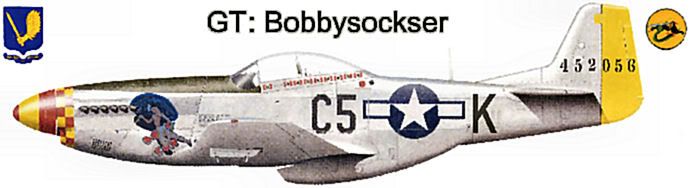
Holloman became rated in the famous P-40, P-39 and P-47 fighters, and like many aviators, his heart was stolen by the sleek P-51 Mustang. The 332nd painted their aircraft with distinctively crimson control surfaces, and thoroughout the campaign in Europe, the "Red Tails" were noted as a fierce bunch of fighter pilots who went the extra air mile to protect bombers -- and often the crews who praised them didn't know the Red Tails were black.
Star Wars" creator George Lucas' dream project is a movie about the 332nd, called, naturally, "Red Tails." Holloman was called to Los Angeles last week to consult on the script.
"By 1945, we pretty much controlled the air," said Holloman. "We'd do five escort missions, then get to do one search-and-destroy or strafing mission, which we preferred because it was more exciting! As a whole, fighter pilots are crazy young men, and we liked it that way."
The armed forces were desegregated in 1948 by executive order, creating by law -- supposedly -- the only fully integrated communities in the United States. "I discovered quickly that you can have friends in the military, and be treated as an equal, as long as our kids didn't date," said Holloman. "If there was any good that came out of World War II, it was the notion that we ignore the color of our skin when we're in the trenches together. America is not perfect -- 'America' is a goal, a dream to work toward."
__________________
|